Notebooks & Journals

Atoll Notebook

from $7.38

Min Qty: 50

In Stock

SKU:
679313
679313
Price per unit (ex. GST)
$ / unit
Price varies by quantity — select a tier below
50–99
$10.30
 
100–249
$9.24
Save 10%
250–499
$8.35
Save 19%
500–999
$8.04
Save 22%
1,000–2,499
$7.73
Save 25%
2,500+
$7.38
Save 28%
Grey
ItemQtyNote
Atoll Notebook Grey2500

Last updated: 2 minutes ago

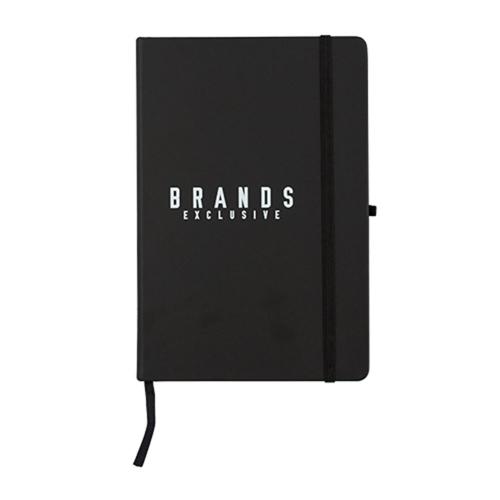
Decoration example for 1 Colour 1 Location Pad Print
Pad printing is the process of using a silicone pad to pick up ink from a Cliche or Metal template, and transferring the ink to products with hard surfaces. This process is ideal for small decoration areas with high detail.
Decoration example for 1 Colour 1 Location Pad Print

Pad printing is the process of using a silicone pad to pick up ink from a Cliche or Metal template, and transferring the ink to products with hard surfaces. This process is ideal for small decoration areas with high detail.

Advantages

  • Ideal for printing on curved or uneven products.
  • Prints sharp, clean images with detail as fine as 0.4mm, minimum text size is 5pt
  • Close PMS matches are possible on white or light-coloured products. Can print multiple solid colours.

Disadvantages

  • Unable to print variable data such as individual naming
  • Full-colour designs and gradients are not possible
  • Each colour requires its own setup charge
Decoration example for 2 Colour 1 Location Pad Print
Pad printing is the process of using a silicone pad to pick up ink from a Cliche or Metal template, and transferring the ink to products with hard surfaces. This process is ideal for small decoration areas with high detail.
Decoration example for 2 Colour 1 Location Pad Print

Pad printing is the process of using a silicone pad to pick up ink from a Cliche or Metal template, and transferring the ink to products with hard surfaces. This process is ideal for small decoration areas with high detail.

Advantages

  • Ideal for printing on curved or uneven products.
  • Prints sharp, clean images with detail as fine as 0.4mm, minimum text size is 5pt
  • Close PMS matches are possible on white or light-coloured products. Can print multiple solid colours.

Disadvantages

  • Unable to print variable data such as individual naming
  • Full-colour designs and gradients are not possible
  • Each colour requires its own setup charge
Decoration example for 3 Colour 1 Location Pad Print
Pad printing is the process of using a silicone pad to pick up ink from a Cliche or Metal template, and transferring the ink to products with hard surfaces. This process is ideal for small decoration areas with high detail.
Decoration example for 3 Colour 1 Location Pad Print

Pad printing is the process of using a silicone pad to pick up ink from a Cliche or Metal template, and transferring the ink to products with hard surfaces. This process is ideal for small decoration areas with high detail.

Advantages

  • Ideal for printing on curved or uneven products.
  • Prints sharp, clean images with detail as fine as 0.4mm, minimum text size is 5pt
  • Close PMS matches are possible on white or light-coloured products. Can print multiple solid colours.

Disadvantages

  • Unable to print variable data such as individual naming
  • Full-colour designs and gradients are not possible
  • Each colour requires its own setup charge
Decoration example for 1 Colour 2 Location Pad Print
Pad printing is the process of using a silicone pad to pick up ink from a Cliche or Metal template, and transferring the ink to products with hard surfaces. This process is ideal for small decoration areas with high detail.
Decoration example for 1 Colour 2 Location Pad Print

Pad printing is the process of using a silicone pad to pick up ink from a Cliche or Metal template, and transferring the ink to products with hard surfaces. This process is ideal for small decoration areas with high detail.

Advantages

  • Ideal for printing on curved or uneven products.
  • Prints sharp, clean images with detail as fine as 0.4mm, minimum text size is 5pt
  • Close PMS matches are possible on white or light-coloured products. Can print multiple solid colours.

Disadvantages

  • Unable to print variable data such as individual naming
  • Full-colour designs and gradients are not possible
  • Each colour requires its own setup charge
Decoration example for 2 Colour 2 Location Pad Print
Pad printing is the process of using a silicone pad to pick up ink from a Cliche or Metal template, and transferring the ink to products with hard surfaces. This process is ideal for small decoration areas with high detail.
Decoration example for 2 Colour 2 Location Pad Print

Pad printing is the process of using a silicone pad to pick up ink from a Cliche or Metal template, and transferring the ink to products with hard surfaces. This process is ideal for small decoration areas with high detail.

Advantages

  • Ideal for printing on curved or uneven products.
  • Prints sharp, clean images with detail as fine as 0.4mm, minimum text size is 5pt
  • Close PMS matches are possible on white or light-coloured products. Can print multiple solid colours.

Disadvantages

  • Unable to print variable data such as individual naming
  • Full-colour designs and gradients are not possible
  • Each colour requires its own setup charge
Decoration example for 3 Colour 2 Location Pad Print
Pad printing is the process of using a silicone pad to pick up ink from a Cliche or Metal template, and transferring the ink to products with hard surfaces. This process is ideal for small decoration areas with high detail.
Decoration example for 3 Colour 2 Location Pad Print

Pad printing is the process of using a silicone pad to pick up ink from a Cliche or Metal template, and transferring the ink to products with hard surfaces. This process is ideal for small decoration areas with high detail.

Advantages

  • Ideal for printing on curved or uneven products.
  • Prints sharp, clean images with detail as fine as 0.4mm, minimum text size is 5pt
  • Close PMS matches are possible on white or light-coloured products. Can print multiple solid colours.

Disadvantages

  • Unable to print variable data such as individual naming
  • Full-colour designs and gradients are not possible
  • Each colour requires its own setup charge
Decoration example for 1 Colour 3 Location Pad Print
Pad printing is the process of using a silicone pad to pick up ink from a Cliche or Metal template, and transferring the ink to products with hard surfaces. This process is ideal for small decoration areas with high detail.
Decoration example for 1 Colour 3 Location Pad Print

Pad printing is the process of using a silicone pad to pick up ink from a Cliche or Metal template, and transferring the ink to products with hard surfaces. This process is ideal for small decoration areas with high detail.

Advantages

  • Ideal for printing on curved or uneven products.
  • Prints sharp, clean images with detail as fine as 0.4mm, minimum text size is 5pt
  • Close PMS matches are possible on white or light-coloured products. Can print multiple solid colours.

Disadvantages

  • Unable to print variable data such as individual naming
  • Full-colour designs and gradients are not possible
  • Each colour requires its own setup charge
Decoration example for 2 Colour 3 Location Pad Print
Pad printing is the process of using a silicone pad to pick up ink from a Cliche or Metal template, and transferring the ink to products with hard surfaces. This process is ideal for small decoration areas with high detail.
Decoration example for 2 Colour 3 Location Pad Print

Pad printing is the process of using a silicone pad to pick up ink from a Cliche or Metal template, and transferring the ink to products with hard surfaces. This process is ideal for small decoration areas with high detail.

Advantages

  • Ideal for printing on curved or uneven products.
  • Prints sharp, clean images with detail as fine as 0.4mm, minimum text size is 5pt
  • Close PMS matches are possible on white or light-coloured products. Can print multiple solid colours.

Disadvantages

  • Unable to print variable data such as individual naming
  • Full-colour designs and gradients are not possible
  • Each colour requires its own setup charge
Decoration example for 3 Colour 3 Location Pad Print
Pad printing is the process of using a silicone pad to pick up ink from a Cliche or Metal template, and transferring the ink to products with hard surfaces. This process is ideal for small decoration areas with high detail.
Decoration example for 3 Colour 3 Location Pad Print

Pad printing is the process of using a silicone pad to pick up ink from a Cliche or Metal template, and transferring the ink to products with hard surfaces. This process is ideal for small decoration areas with high detail.

Advantages

  • Ideal for printing on curved or uneven products.
  • Prints sharp, clean images with detail as fine as 0.4mm, minimum text size is 5pt
  • Close PMS matches are possible on white or light-coloured products. Can print multiple solid colours.

Disadvantages

  • Unable to print variable data such as individual naming
  • Full-colour designs and gradients are not possible
  • Each colour requires its own setup charge
Decoration example for 1 Colour 1 Location Screen Print
Screen printing is the process of pressing ink through a fine mesh screen onto flat or fabric products. The screen is covered in a stencil that only allows ink through where the design requires.
Decoration example for 1 Colour 1 Location Screen Print

Screen printing is the process of pressing ink through a fine mesh screen onto flat or fabric products. The screen is covered in a stencil that only allows ink through where the design requires.

Advantages

  • Large print areas are achievable on flat products.
  • An economical decoration method for larger print runs or designs with only a few colours
  • Close PMS matches are able to be achieved

Disadvantages

  • Full-colour designs and gradients are not possible
  • Each colour requires its own setup charge
  • Printing on darker coloured products may require a base print
Decoration example for 2 Colour 1 Location Screen Print
Screen printing is the process of pressing ink through a fine mesh screen onto flat or fabric products. The screen is covered in a stencil that only allows ink through where the design requires.
Decoration example for 2 Colour 1 Location Screen Print

Screen printing is the process of pressing ink through a fine mesh screen onto flat or fabric products. The screen is covered in a stencil that only allows ink through where the design requires.

Advantages

  • Large print areas are achievable on flat products.
  • An economical decoration method for larger print runs or designs with only a few colours
  • Close PMS matches are able to be achieved

Disadvantages

  • Full-colour designs and gradients are not possible
  • Each colour requires its own setup charge
  • Printing on darker coloured products may require a base print
Decoration example for 3 Colour 1 Location Screen Print
Screen printing is the process of pressing ink through a fine mesh screen onto flat or fabric products. The screen is covered in a stencil that only allows ink through where the design requires.
Decoration example for 3 Colour 1 Location Screen Print

Screen printing is the process of pressing ink through a fine mesh screen onto flat or fabric products. The screen is covered in a stencil that only allows ink through where the design requires.

Advantages

  • Large print areas are achievable on flat products.
  • An economical decoration method for larger print runs or designs with only a few colours
  • Close PMS matches are able to be achieved

Disadvantages

  • Full-colour designs and gradients are not possible
  • Each colour requires its own setup charge
  • Printing on darker coloured products may require a base print
Decoration example for 1 Colour 2 Location Screen Print
Screen printing is the process of pressing ink through a fine mesh screen onto flat or fabric products. The screen is covered in a stencil that only allows ink through where the design requires.
Decoration example for 1 Colour 2 Location Screen Print

Screen printing is the process of pressing ink through a fine mesh screen onto flat or fabric products. The screen is covered in a stencil that only allows ink through where the design requires.

Advantages

  • Large print areas are achievable on flat products.
  • An economical decoration method for larger print runs or designs with only a few colours
  • Close PMS matches are able to be achieved

Disadvantages

  • Full-colour designs and gradients are not possible
  • Each colour requires its own setup charge
  • Printing on darker coloured products may require a base print
Decoration example for 2 Colour 2 Location Screen Print
Screen printing is the process of pressing ink through a fine mesh screen onto flat or fabric products. The screen is covered in a stencil that only allows ink through where the design requires.
Decoration example for 2 Colour 2 Location Screen Print

Screen printing is the process of pressing ink through a fine mesh screen onto flat or fabric products. The screen is covered in a stencil that only allows ink through where the design requires.

Advantages

  • Large print areas are achievable on flat products.
  • An economical decoration method for larger print runs or designs with only a few colours
  • Close PMS matches are able to be achieved

Disadvantages

  • Full-colour designs and gradients are not possible
  • Each colour requires its own setup charge
  • Printing on darker coloured products may require a base print
Decoration example for 3 Colour 2 Location Screen Print
Screen printing is the process of pressing ink through a fine mesh screen onto flat or fabric products. The screen is covered in a stencil that only allows ink through where the design requires.
Decoration example for 3 Colour 2 Location Screen Print

Screen printing is the process of pressing ink through a fine mesh screen onto flat or fabric products. The screen is covered in a stencil that only allows ink through where the design requires.

Advantages

  • Large print areas are achievable on flat products.
  • An economical decoration method for larger print runs or designs with only a few colours
  • Close PMS matches are able to be achieved

Disadvantages

  • Full-colour designs and gradients are not possible
  • Each colour requires its own setup charge
  • Printing on darker coloured products may require a base print
Decoration example for Laser Engraving
Laser engraving is a durable decoration method, where a precision laser is used to remove the top surface of a product.
Decoration example for Laser Engraving

Laser engraving is a durable decoration method, where a precision laser is used to remove the top surface of a product.

Advantages

  • The branding becomes part of the surface and is permanent.
  • Fine details are achievable
  • Variable data including individual names is available on select products.

Disadvantages

  • PMS matching is usually not an option as engraving removes the top surface to reveal the base material
  • Fine detail can be lost on smaller products like pens.
Decoration example for 1 Location Thermo Debossing
Debossing is the process of making an indentation of your design in a product, this is often done by pressing a heated metal plate firmly onto the surface.
Decoration example for 1 Location Thermo Debossing

Debossing is the process of making an indentation of your design in a product, this is often done by pressing a heated metal plate firmly onto the surface.

Advantages

  • The branding becomes part of the product and is permanent.
  • Additional heat can often be used to create a premium looking tone on tone finish
  • Foil Debossing can allow for metallic colour to be added to the deboss

Disadvantages

  • Unable to print in specific Pantones/PMS colours
Decoration example for 2 Location Thermo Debossing
Debossing is the process of making an indentation of your design in a product, this is often done by pressing a heated metal plate firmly onto the surface.
Decoration example for 2 Location Thermo Debossing

Debossing is the process of making an indentation of your design in a product, this is often done by pressing a heated metal plate firmly onto the surface.

Advantages

  • The branding becomes part of the product and is permanent.
  • Additional heat can often be used to create a premium looking tone on tone finish
  • Foil Debossing can allow for metallic colour to be added to the deboss

Disadvantages

  • Unable to print in specific Pantones/PMS colours
Decoration example for Thermo Debossing XL
Debossing is the process of making an indentation of your design in a product, this is often done by pressing a heated metal plate firmly onto the surface.
Decoration example for Thermo Debossing XL

Debossing is the process of making an indentation of your design in a product, this is often done by pressing a heated metal plate firmly onto the surface.

Advantages

  • The branding becomes part of the product and is permanent.
  • Additional heat can often be used to create a premium looking tone on tone finish
  • Foil Debossing can allow for metallic colour to be added to the deboss

Disadvantages

  • Unable to print in specific Pantones/PMS colours
Grey
Clear
If confirmed by 22nd July
Delivery by ~5th Aug.
Need it sooner? with us.
2 Weeks
In Stock
$TBD ex GST
Free Shipping & Setup

Minimum qty is 50

⏰ Get a quote now to lock in this pricing for 72 hours

99.4% jobs
delivered on-time

Free graphic
design

Quotes within
24 hours

Free Artwork
🇦🇺 Australian-Owned
🔒 Secure Checkout

Get an instant quote

Description

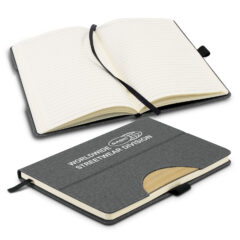
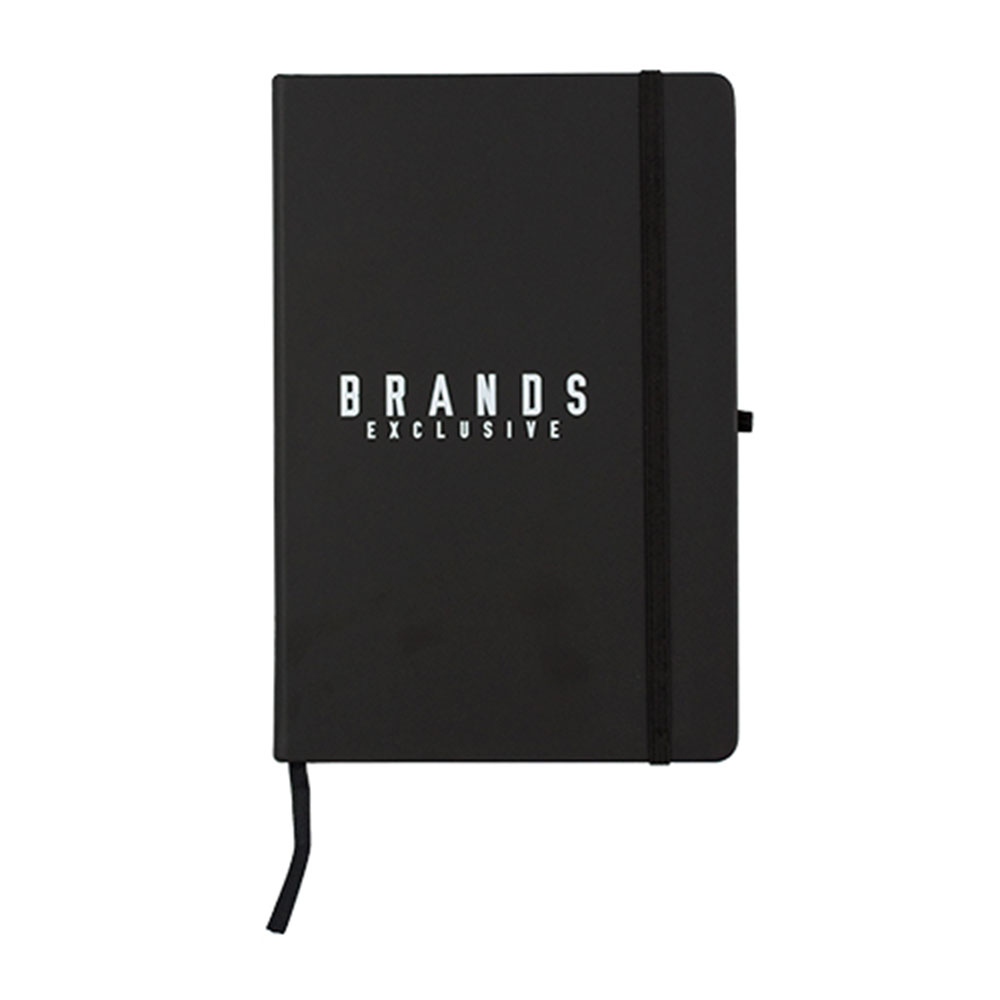
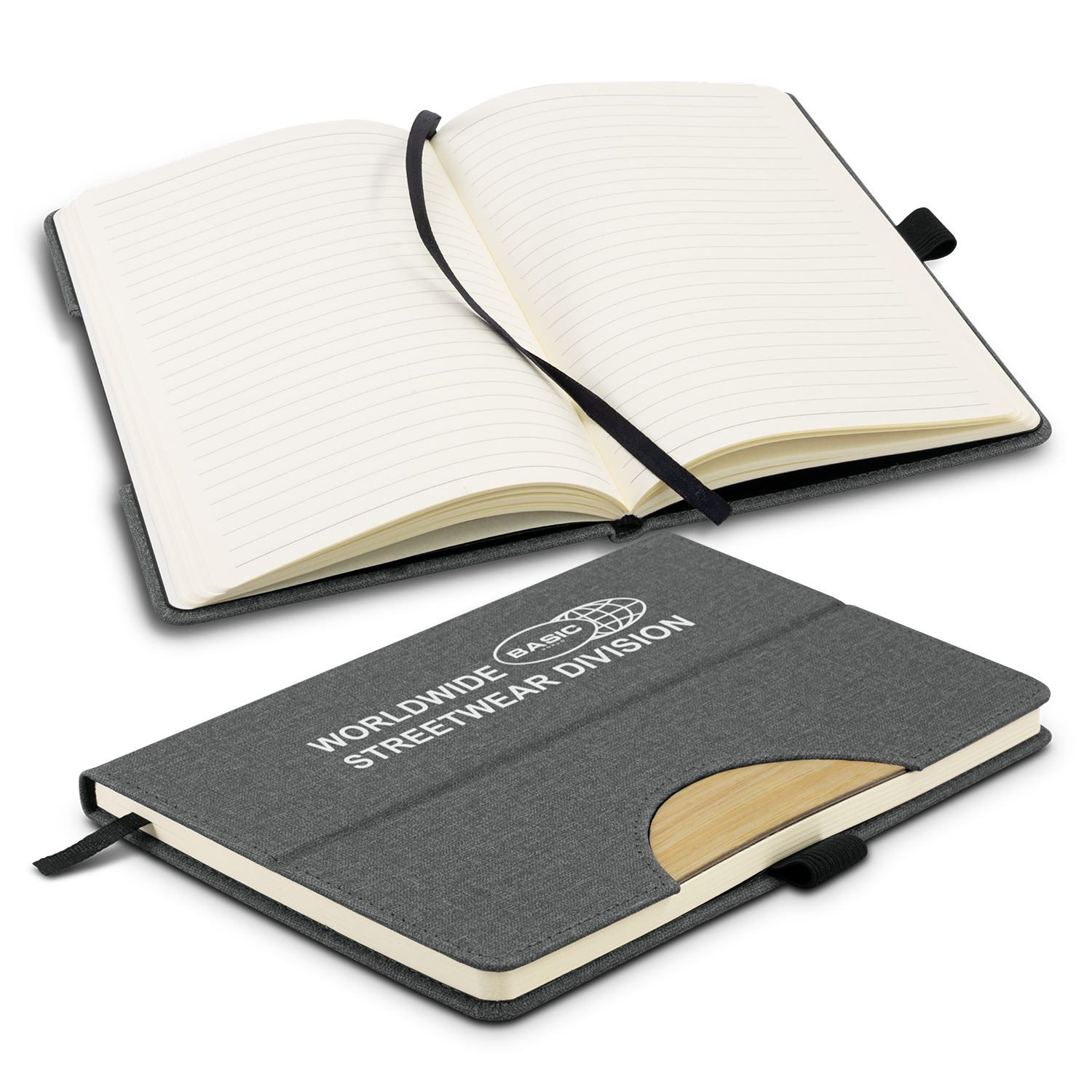
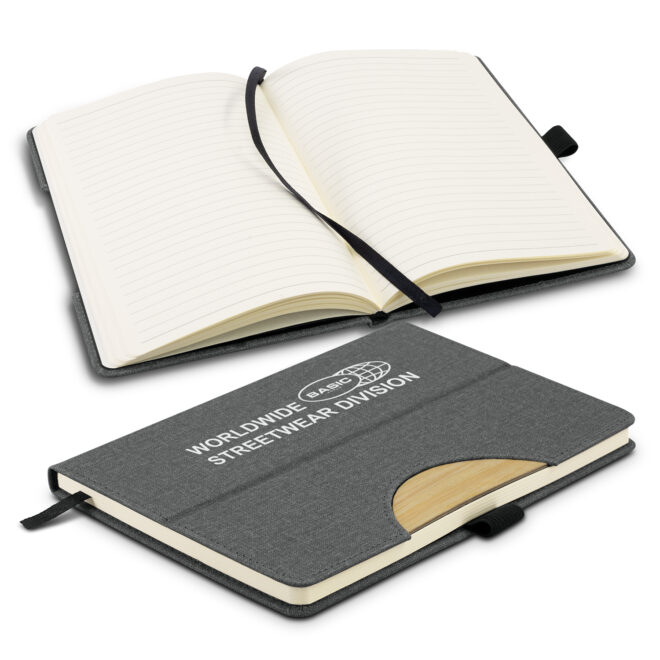
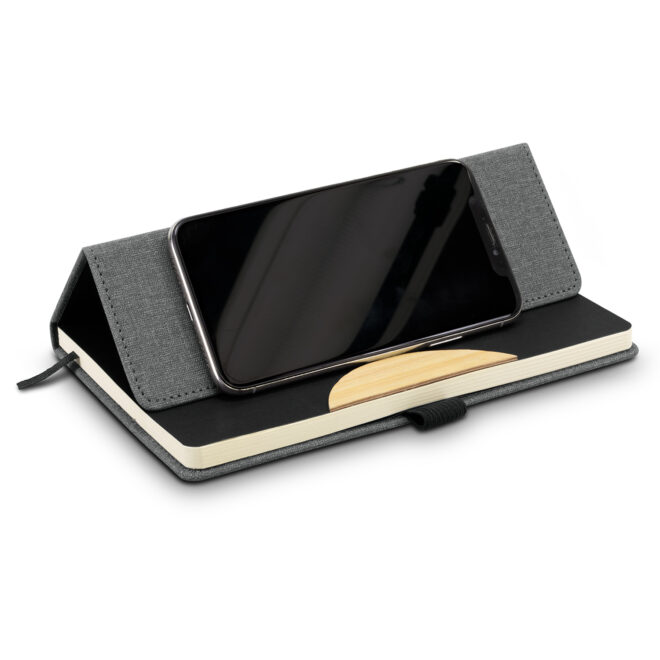
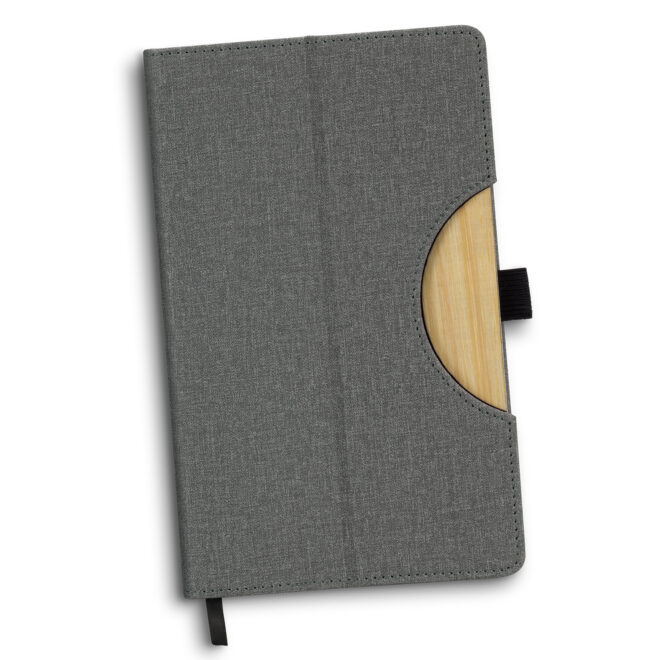
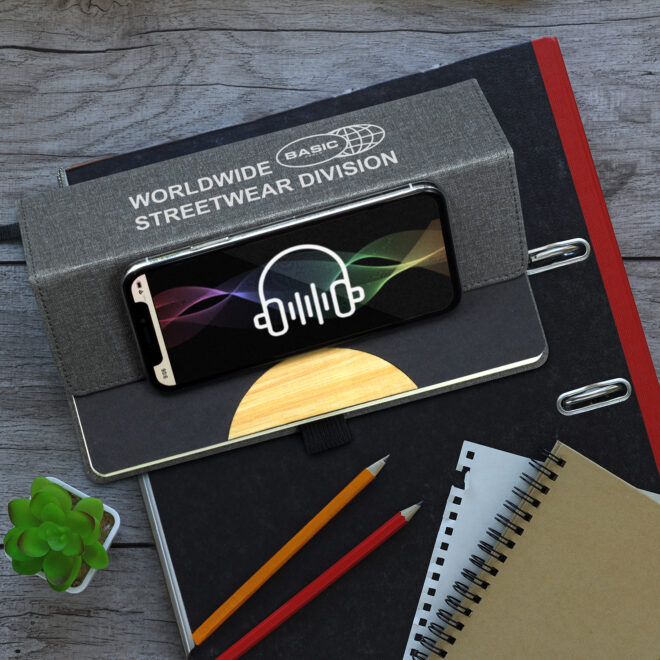
The Atoll Notebook is an eco-friendly promotional product perfect for corporate gifts and client giveaways. Its clever design features a hard thermo PU cover that doubles as a phone stand, with a natural bamboo panel adding sustainable style. Packed with 160 pages of quality 70gsm lined cream paper, elastic pen loop, and ribbon bookmark, it's a practical branded merch choice for any professional setting.

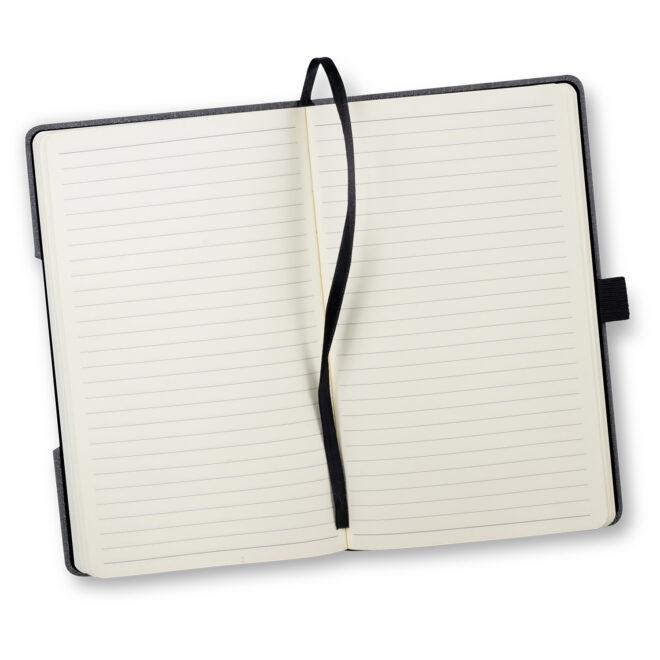
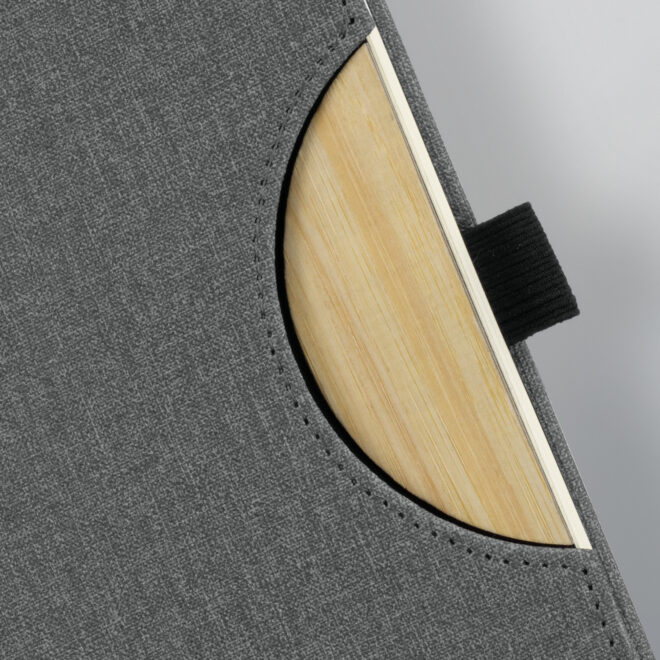
This handy medium-sized (approximately A5) notebook features a hard thermo PU cover that doubles as a phone stand. A natural bamboo panel on the flyleaf acts as the base of the phone stand. Atoll has 80 leaves (160 pages) of 70gsm lined cream paper and has a black bookmark ribbon and elastic pen loop.

Cover Type: Hard
Size: Medium
Page Colour: Cream
Page Edges: Round
Binding Method: Case
Leaves: 80
Page Weight: 70gsm
Approx. Cover Thickness: 2.5mm
Page Design: Lined
Note: Bamboo is a natural material which produces unavoidable variances in the grain pattern, colour and branding.
Country Of Origin: China

Loose packed

Dimensions:
W 130 x H 211 x D 15

$ per unit