Tote Bags

Sonnet Colouring Tote Bag

from $3.96

Min Qty: 100

In Stock

SKU:
668567
668567
Price per unit (ex. GST)
$ / unit
Price varies by quantity — select a tier below
100–249
$5.86
 
250–499
$5.26
Save 10%
500–999
$4.96
Save 15%
1,000–2,499
$4.80
Save 18%
2,500–4,999
$4.61
Save 21%
5,000+
$4.51
Save 23%
White
ItemQtyNote
White18509500 due Mid Aug
Natural Crayon Set15400

Last updated: 6 days ago

Decoration example for 1 Colour Screen Print
Screen printing is the process of pressing ink through a fine mesh screen onto flat or fabric products. The screen is covered in a stencil that only allows ink through where the design requires.
Decoration example for 1 Colour Screen Print

Screen printing is the process of pressing ink through a fine mesh screen onto flat or fabric products. The screen is covered in a stencil that only allows ink through where the design requires.

Advantages

  • Large print areas are achievable on flat products.
  • An economical decoration method for larger print runs or designs with only a few colours
  • Close PMS matches are able to be achieved

Disadvantages

  • Full-colour designs and gradients are not possible
  • Each colour requires its own setup charge
  • Printing on darker coloured products may require a base print
Decoration example for 2 Colour Screen Print
Screen printing is the process of pressing ink through a fine mesh screen onto flat or fabric products. The screen is covered in a stencil that only allows ink through where the design requires.
Decoration example for 2 Colour Screen Print

Screen printing is the process of pressing ink through a fine mesh screen onto flat or fabric products. The screen is covered in a stencil that only allows ink through where the design requires.

Advantages

  • Large print areas are achievable on flat products.
  • An economical decoration method for larger print runs or designs with only a few colours
  • Close PMS matches are able to be achieved

Disadvantages

  • Full-colour designs and gradients are not possible
  • Each colour requires its own setup charge
  • Printing on darker coloured products may require a base print
Decoration example for 3 Colour Screen Print
Screen printing is the process of pressing ink through a fine mesh screen onto flat or fabric products. The screen is covered in a stencil that only allows ink through where the design requires.
Decoration example for 3 Colour Screen Print

Screen printing is the process of pressing ink through a fine mesh screen onto flat or fabric products. The screen is covered in a stencil that only allows ink through where the design requires.

Advantages

  • Large print areas are achievable on flat products.
  • An economical decoration method for larger print runs or designs with only a few colours
  • Close PMS matches are able to be achieved

Disadvantages

  • Full-colour designs and gradients are not possible
  • Each colour requires its own setup charge
  • Printing on darker coloured products may require a base print
Decoration example for 1 Colour 1 Location Pad Print
Pad printing is the process of using a silicone pad to pick up ink from a Cliche or Metal template, and transferring the ink to products with hard surfaces. This process is ideal for small decoration areas with high detail.
Decoration example for 1 Colour 1 Location Pad Print

Pad printing is the process of using a silicone pad to pick up ink from a Cliche or Metal template, and transferring the ink to products with hard surfaces. This process is ideal for small decoration areas with high detail.

Advantages

  • Ideal for printing on curved or uneven products.
  • Prints sharp, clean images with detail as fine as 0.4mm, minimum text size is 5pt
  • Close PMS matches are possible on white or light-coloured products. Can print multiple solid colours.

Disadvantages

  • Unable to print variable data such as individual naming
  • Full-colour designs and gradients are not possible
  • Each colour requires its own setup charge
Decoration example for 2 Colour 1 Location Pad Print
Pad printing is the process of using a silicone pad to pick up ink from a Cliche or Metal template, and transferring the ink to products with hard surfaces. This process is ideal for small decoration areas with high detail.
Decoration example for 2 Colour 1 Location Pad Print

Pad printing is the process of using a silicone pad to pick up ink from a Cliche or Metal template, and transferring the ink to products with hard surfaces. This process is ideal for small decoration areas with high detail.

Advantages

  • Ideal for printing on curved or uneven products.
  • Prints sharp, clean images with detail as fine as 0.4mm, minimum text size is 5pt
  • Close PMS matches are possible on white or light-coloured products. Can print multiple solid colours.

Disadvantages

  • Unable to print variable data such as individual naming
  • Full-colour designs and gradients are not possible
  • Each colour requires its own setup charge
Decoration example for 3 Colour 1 Location Pad Print
Pad printing is the process of using a silicone pad to pick up ink from a Cliche or Metal template, and transferring the ink to products with hard surfaces. This process is ideal for small decoration areas with high detail.
Decoration example for 3 Colour 1 Location Pad Print

Pad printing is the process of using a silicone pad to pick up ink from a Cliche or Metal template, and transferring the ink to products with hard surfaces. This process is ideal for small decoration areas with high detail.

Advantages

  • Ideal for printing on curved or uneven products.
  • Prints sharp, clean images with detail as fine as 0.4mm, minimum text size is 5pt
  • Close PMS matches are possible on white or light-coloured products. Can print multiple solid colours.

Disadvantages

  • Unable to print variable data such as individual naming
  • Full-colour designs and gradients are not possible
  • Each colour requires its own setup charge
Decoration example for 1 Colour 2 Location Pad Print
Pad printing is the process of using a silicone pad to pick up ink from a Cliche or Metal template, and transferring the ink to products with hard surfaces. This process is ideal for small decoration areas with high detail.
Decoration example for 1 Colour 2 Location Pad Print

Pad printing is the process of using a silicone pad to pick up ink from a Cliche or Metal template, and transferring the ink to products with hard surfaces. This process is ideal for small decoration areas with high detail.

Advantages

  • Ideal for printing on curved or uneven products.
  • Prints sharp, clean images with detail as fine as 0.4mm, minimum text size is 5pt
  • Close PMS matches are possible on white or light-coloured products. Can print multiple solid colours.

Disadvantages

  • Unable to print variable data such as individual naming
  • Full-colour designs and gradients are not possible
  • Each colour requires its own setup charge
Decoration example for 2 Colour 2 Location Pad Print
Pad printing is the process of using a silicone pad to pick up ink from a Cliche or Metal template, and transferring the ink to products with hard surfaces. This process is ideal for small decoration areas with high detail.
Decoration example for 2 Colour 2 Location Pad Print

Pad printing is the process of using a silicone pad to pick up ink from a Cliche or Metal template, and transferring the ink to products with hard surfaces. This process is ideal for small decoration areas with high detail.

Advantages

  • Ideal for printing on curved or uneven products.
  • Prints sharp, clean images with detail as fine as 0.4mm, minimum text size is 5pt
  • Close PMS matches are possible on white or light-coloured products. Can print multiple solid colours.

Disadvantages

  • Unable to print variable data such as individual naming
  • Full-colour designs and gradients are not possible
  • Each colour requires its own setup charge
Decoration example for 3 Colour 2 Location Pad Print
Pad printing is the process of using a silicone pad to pick up ink from a Cliche or Metal template, and transferring the ink to products with hard surfaces. This process is ideal for small decoration areas with high detail.
Decoration example for 3 Colour 2 Location Pad Print

Pad printing is the process of using a silicone pad to pick up ink from a Cliche or Metal template, and transferring the ink to products with hard surfaces. This process is ideal for small decoration areas with high detail.

Advantages

  • Ideal for printing on curved or uneven products.
  • Prints sharp, clean images with detail as fine as 0.4mm, minimum text size is 5pt
  • Close PMS matches are possible on white or light-coloured products. Can print multiple solid colours.

Disadvantages

  • Unable to print variable data such as individual naming
  • Full-colour designs and gradients are not possible
  • Each colour requires its own setup charge
White
Clear
If confirmed by 2nd July
Delivery by ~16th Jul.
Need it sooner? with us.
2 Weeks
In Stock
$TBD ex GST
Free Shipping & Setup

Minimum qty is 100

⏰ Get a quote now to lock in this pricing for 72 hours

99.4% jobs
delivered on-time

Free graphic
design

Quotes within
24 hours

Free Artwork
🇦🇺 Australian-Owned
🔒 Secure Checkout

Get an instant quote

Description

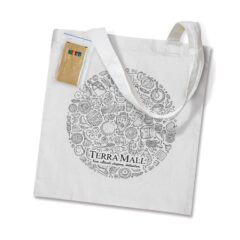
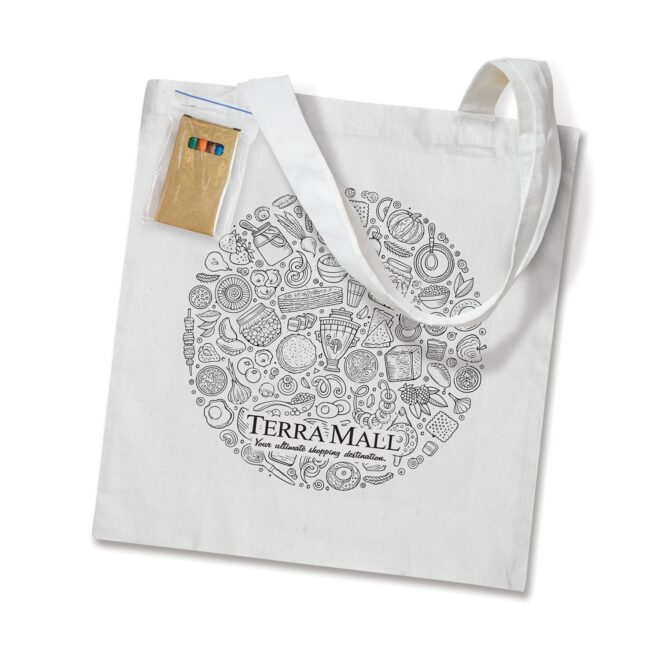
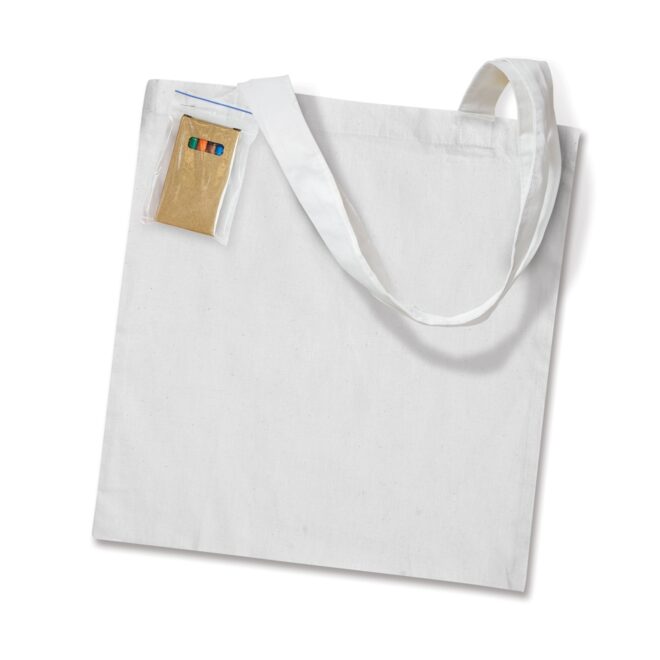
The Sonnet Colouring Tote Bag is a fun, interactive promotional product made from sturdy 135gsm cotton that doubles as a creative canvas for your custom design. Pair it with the included packet of six non-toxic crayons to create an engaging giveaway perfect for fundraisers, awareness campaigns, or trade show competitions. It's a playful way to get your branded merch noticed and encourage participation.

Reusable 135gsm cotton tote bag which is supplied with a packet of six non-toxic crayons. The bag can be branded with a customised design for colouring in. It is ideal as an interactive product for raising awareness or sell it as a fundraiser and run a competition.

Capacity: 1L
Country of Origin: China

Loose Packed

Dimensions:
H 410mm x W 380mm (excludes handles)
Handle Length: 580mm

$ per unit