Sustainable merch is no longer a nice-to-have or a PR bonus; it’s a clear expectation. Customers, partners, and employees now assume that if your logo appears on a product, you’ve done the work to ensure it’s ethical, responsible, and genuinely sustainable.
The real challenge? It’s not choosing “eco” merch, but making sure that merch is actually sustainable (not just marketed that way).
The Greenwashing Problem (and Why Merch Isn’t Immune)
By now, most people are familiar with greenwashing: the practice of making a company, product, or service appear more environmentally friendly than it really is.
You can’t take words like “green,” “eco,” or “sustainable” at face value without fact-checking the claims. Unfortunately, the branded merchandise industry is one of the sectors where greenwashing frequently rears its ugly head.
If sustainability genuinely matters to your brand, the key question in 2026 is:
How Do You Ensure Your Merch Is Actually Sustainable in 2026?
1. Transparency Across the Entire Supply Chain
A genuinely sustainable merch provider is upfront about where products are made and how materials are sourced. They’ll be able to share who is involved at every stage of production.
If you have to go digging for information, or if sustainability details are buried in jargon and vague statements, consider it a red flag.
Transparency is one of the most effective ways to spot and prevent greenwashing, because it leaves them with nowhere to hide.
2. Verify their Sustainable Initiatives
Background checks are standard when hiring an employee. The same principle should apply when trusting a merch provider with your brand. So please, do your homework.
What we’re looking for here is an understanding of what these certifications actually mean and ensuring they’re backed by real, measurable impact.
Here are a couple of ways we put that into practice:
1% for the Planet Member
- We’re listed in the official 1% for the Planet directory with our Good Range of products. This global organisation exists to prevent greenwashing, verify environmental giving, and hold businesses accountable for their impact. Becoming a member is an investment in ethical business and the future of our planet. Verify it here.
Australian Packaging Covenant Organisation (APCO) Member
- As APCO members, we actively work towards the National Packaging Targets, implement improved packaging practices, and use the Australian Recycling Label (ARL) to help customers dispose of packaging correctly. Verify it here.
To see our full list of sustainability measures, visit https://goodthings.com.au/sustainability-initiatives/.
3. Materials: The Proof is the Percentage
When it comes to sustainable merchandise, the environmental impact also hinges on how much recycled or organic material is actually being used. If a product claims to be made from recycled or organic materials, your supplier should be able to provide you with the exact percentage.
Phrases like “contains recycled materials” do not tell the full story. Are we talking 5%, 15%, 50%, or 100%? Each amount has a different impact.
Not all materials are equally recyclable or compostable. A knowledgeable merch provider can guide you through this, helping you make informed, sustainable choices.
4. Durability > Disposable SWAG
The most sustainable product is one that lasts.
Low-quality merchandise, even if technically “eco-friendly,” often ends up in a landfill. While removing single-use items is a good start, building branded products made to last is the true goal.
Truly sustainable merch focuses on durability, longevity, and thoughtful design over short-term, throw-away items. This goes beyond choosing multi-use items or durable materials. It is about knowing your audience and creating products they are bound to use.
A bonus of designing for longevity: well-made, thoughtful items lead to greater brand exposure.
5. Customisation = Complete Control
While we often harp on about the benefits of custom products from a brand perspective, sustainability can be placed front and centre.
With custom-designed products, you can consider every step: materials, production methods, packaging, and usability.
Know Your Materials: How to Spot Truly Sustainable Merch
 Understanding materials makes it easy to be informed when discussing your products. Here are some sustainable fibres and packaging options to consider in 2026.
Hemp
- One of the strongest and most durable natural fibres, hemp has a significant environmental impact due to its high durability and recyclability. Commonly used in apparel, accessories, and paper, hemp paper can be recycled more times than traditional wood-pulp paper, reducing waste and resource consumption.
Organic Cotton
- This material is grown without harmful pesticides or synthetic fertilisers, which helps maintain healthy soil, protect biodiversity, and support water conservation. Its natural composition is gentle on the skin, making it ideal for apparel and soft goods.
RPET (Recycled Polyethylene Terephthalate)
- Made from recycled PET bottles, cleaned, shredded, and turned into fibres. Helps divert plastic waste from landfills and waterways. It’s often used to make athletic wear and other apparel, as well as bags and outdoor gear like picnic rugs.
Recycled Paper Packaging
- Made from post-consumer waste that’s cleaned, pulped, and remade into boxes, bags, and wrapping. It helps reduce the amount of waste sent to landfills and the need to produce new materials.
LDPE (low-density polyethylene bags)
- Low-density polyethylene bags are durable, reusable, and recyclable. They are still plastic, but last longer and can be recycled. Used responsibly, they are a better alternative to single-use packaging.
What Sustainable Merch Looks Like in Practice
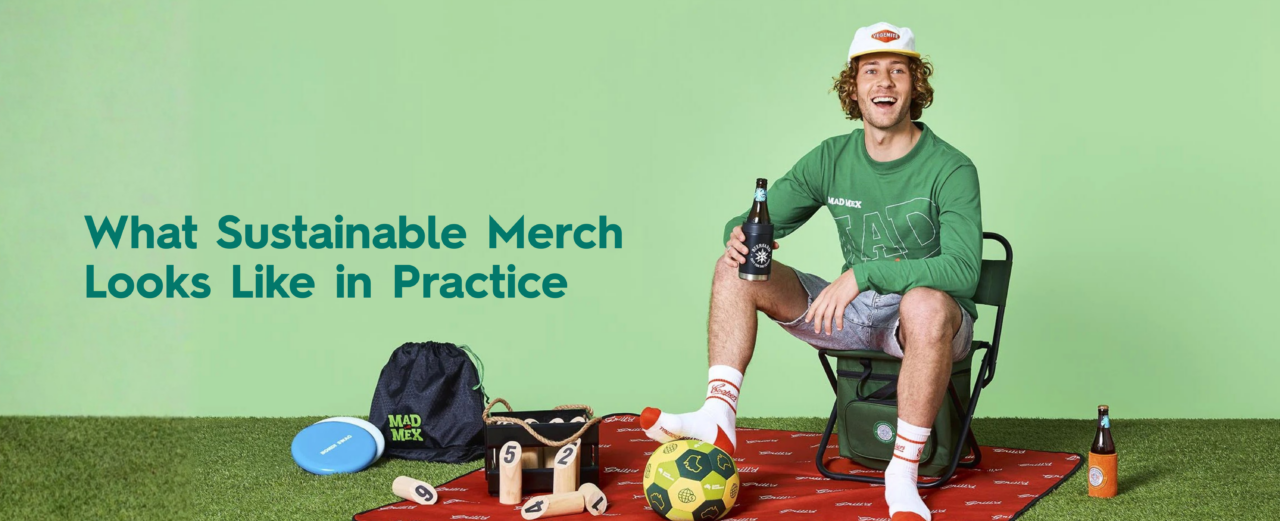
At Good Things, we are committed to being an eco‑leader in promotional products. We reinvent how branded goods are sourced, produced, and ordered.
Our sustainability approach is built around three core principles:
1. Supporting Environmental Causes
We support environmental organisations that protect the planet and operate as a carbon‑positive business.
2. Ethical and Sustainable Sourcing
We work with Fairtrade‑certified and audited suppliers. This ensures fair wages, safe working conditions, and responsible manufacturing.
3. Reducing Our Environmental Footprint
We continually minimise waste, reduce energy use, and improve packaging. We always seek to do better.
How We Plan to Keep Improving

We’re currently pursuing B Corp certification, and it’s just the beginning. We’re committed to continuous improvement through the Kaizen principle.
Our future focus includes:
- Expanding the Good Range with more innovative, sustainable materials
- Strengthening supplier partnerships to increase ethical options
- Growing our network of audited suppliers with certifications like Sedex
Because in 2026 and beyond, sustainable merch isn’t about doing the bare minimum, it’s about doing the work, being transparent, and constantly raising the bar for branded merchandise.
If you want 2026 to be your year for truly sustainable merch, check out our Good Range of eco-friendly merch.