Have you ever fallen in love with a merch mockup?
The colour is exactly right. The design feels fresh, completely on-brand and like something people will actually want to use.
You can already imagine the moment it arrives, opening the boxes, seeing the finished product for the first time, and your team patting you on the back for absolutely knocking this one out of the park.
Then the day comes, and suddenly, reality is a little more humbling.
What happened to your perfect product?
The gap between a digital mockup and the real product
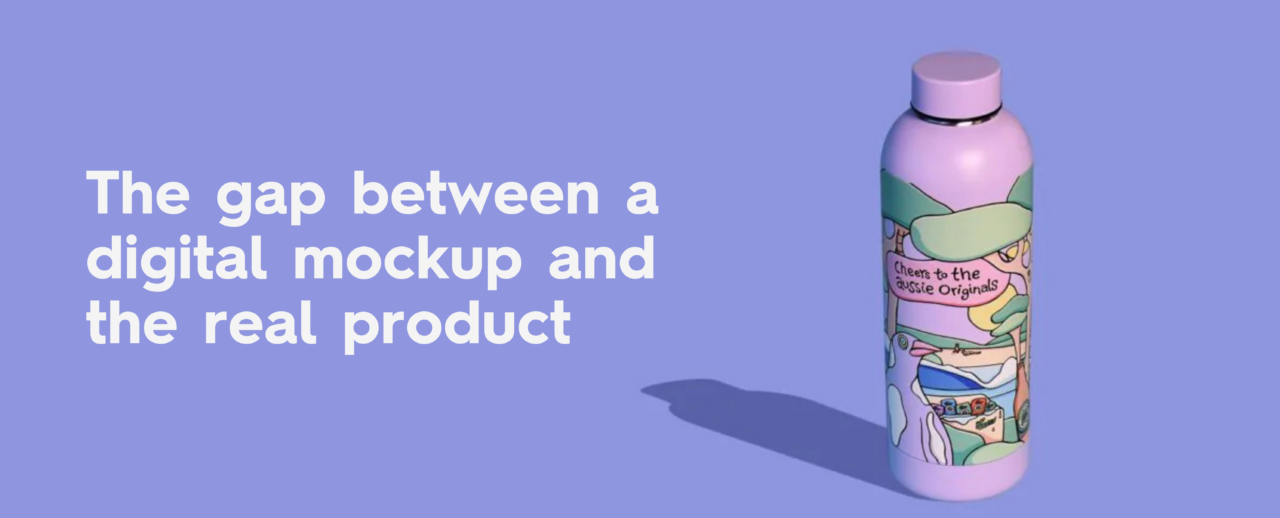
A digital mockup is an important part of the creative process, but it can’t capture every detail of the finished product.
Creating great branded merchandise isn’t just about making something look good on a screen. It’s about understanding the product, the process and, most importantly, the person who will actually use it.
A screen can’t show you:
- How the fabric feels
- The weight and quality of the material
- The texture of a finish
- The depth of embroidery
- The way colours translate onto a physical product
- How the product actually feels when someone picks it up
That’s why great merch requires more than a great design.
Every decision matters, from the product you choose to the artwork that’s dreamt up, to the decoration method that brings it to life.
5 things that can make branded merch miss the mark
1. Choosing the wrong product
A great design can’t fix the wrong product.
Who is receiving it?
How will they use it?
Would someone actually want it?
This is where experience matters. We scour the world for amazing products so you don’t have to, and we mean it. Our dedicated sourcing team keeps its finger on the pulse of our industry. We’re here to bring our partners the best ideas, which means understanding what’s happening in the global merch industry and what’s worth bringing to the table.
Our sourcing team visits gifting trade shows worldwide, including Reed, PPAI, and ASI Chicago. Our team works with brands to understand the audience, campaign goals and overall vision before recommending products that actually make sense.
2. Ignoring materials
Two products can carry the exact same design and create completely different impressions.
The quality, weight, texture and finish all influence how someone experiences your brand.
With custom merchandise, you have much more control over these details, from materials and colours through to packaging and finishes.
With catalogue merchandise, the product is already made and ready for branding, so choosing an item you genuinely love is even more important.
3. Treating a logo like it works everywhere
Nothing ruins the excitement of opening your merch boxes faster than a pixelated, illegible logo in the wrong colours.
A detailed logo that looks incredible on your website may need adapting when it’s embroidered onto a cap, printed onto apparel or positioned on a small product.
That’s why artwork quality matters.
For your logo, our preferred file format is vector artwork because it allows your design to stay crisp, clean and scalable across different applications.
Treat brand guidelines like the law of the land. They ensure that everyone involved in your brand understands how to use the elements correctly.
When we receive your artwork, our team can review it and advise whether it’s suitable for your chosen product and decoration method.
4. Not understanding decoration methods
The way your artwork is applied can completely change the final look and feel.
Different decoration methods create different results, including:
- Embroidery creates a premium, textured finish and is commonly used for apparel, caps, jackets and uniforms.
- Digital transfer allows highly detailed, full-colour designs and works well for complex artwork.
- Screen printing creates bold, durable designs. One colour is printed at a time, meaning multicoloured prints require several screens.
- Embossing creates a raised 3D design for a premium tactile finish, often used on paper and apparel like beanies and caps.
- Pad printing is used on smaller items such as pens, bottles and cups, and is limited up to 3-4 colours.
The right choice depends on your product, artwork and the feeling you want your merch to create.
5. Choosing based only on price
Budget should always be part of the conversation. It’s not always about finding the cheapest option, though. It’s about being strategic with where you invest and where you simplify.
That might mean reducing quantities, changing finishes or exploring different products while still achieving the impact you’re looking for.
Better merch > more merch.
How Good Things never misses the mark on merch
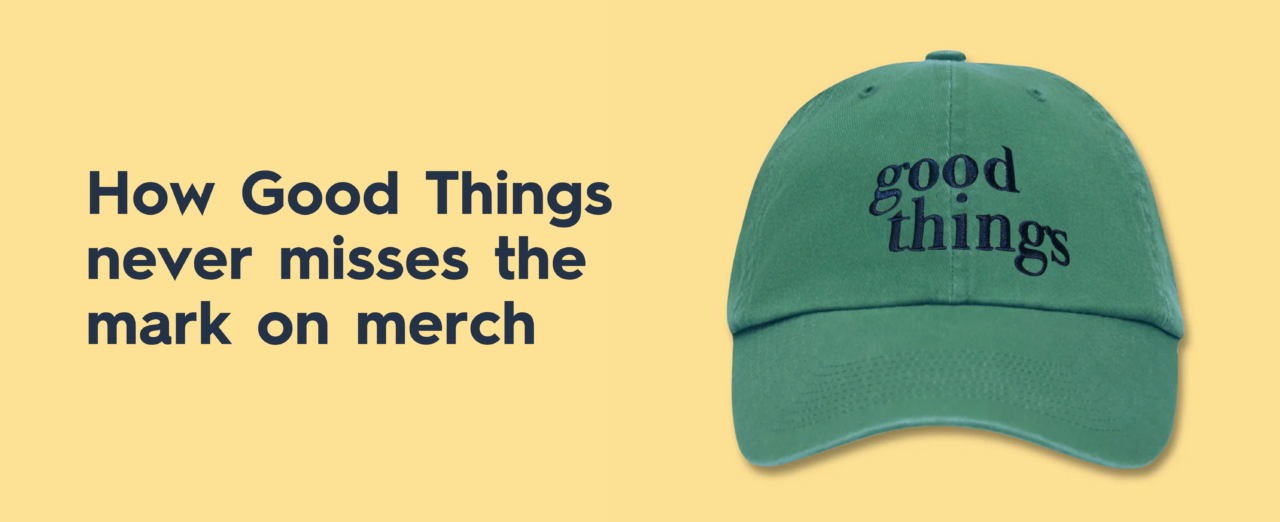
The best branded products come from understanding your brand, your audience and what you want your product to achieve.
At Good Things, we combine creativity, strategy and production expertise to guide brands through every stage of the process.
From product sourcing and creative concepts through to artwork, production and delivery, our team helps ensure every decision moves you closer to a product people genuinely want.
We don’t slap logos on products; we create branded products people remember.
When merch is done right, it doesn’t feel promotional. It’s something people are genuinely excited to get their hands on.