 Australian-Owned
 The good range
 Bags
Bags Caps & Hats
 Clothing & Apparel
 Confectionery
 Conferences & Events
 Drink Bottles
 Eco Friendly
 Giveaways
 Keyrings
 Mugs
Mugs Outdoor
 Packaging
 Pens & Stationery
 Technology
 Umbrellas




Description
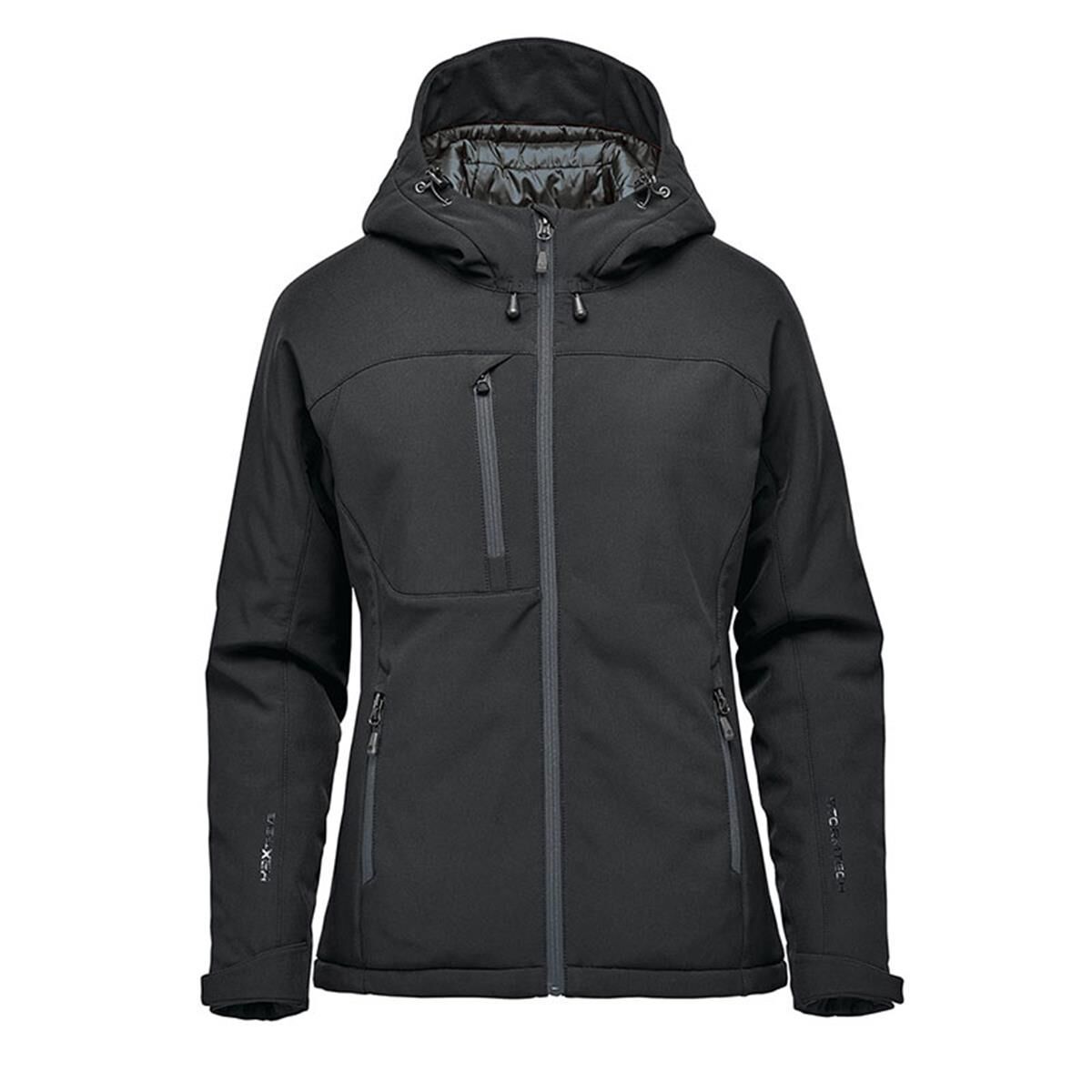
Despite its lightweight, sleek design, this Orbiter Insulated Softshell takes charge of the elements. The PFC-Free water repellent finish dismisses the wet while the thermal shell technology with high loft synthetic insulation feels like a warm hug. Easily adjust the hood and hem for maximum comfort and protection.
• PFC-Free Water Repellent Finish
• Thermal Shell Technology
• Ultra-Lightweight and Soft Thermal Lining
• Adjustable Full Coverage Hood
• Zippered Chest Pocket
• Zippered Hand Warmer Pockets
• Articulated Action Elbows
• Adjustable Hem
• Chin Saver
• Internal Mesh Stash Pocket
• Decoration Access
• (Shell) 88% Polyester/12% Spandex bonded with 100% Polyester Fleece, 8.11 oz/yd2 (USA) / 275gsm (CDN); (Lining) 100% Polyester Taffeta
Additional information
| Colour | Black, Azure Blue, Black, Granite, Black, Red, Granite, Black, Navy, Granite |
|---|---|
| Decoration | Small Embroidery up to 5K stitches, Medium Embroidery up to 10k stitches, Large Embroidery up to 15K Stitches 18cm wide, Extra Large Embroidery 20k embroidery over 18cm, Small Full colour digital Transfer 10x10cm (SuperColour), A4 Full colour digital Transfer (SuperColour), A3 Full colour digital Transfer (SuperColour), 1 Colour ScreenPrint (light colours only), 2 Colour ScreenPrint (light colours only), 3 Colour ScreenPrint (light colours only), 4 Colour ScreenPrint (light colours only), 1 Colour ScreenPrint (dark colours only), 2 Colour ScreenPrint (dark colours only), 3 Colour ScreenPrint (dark colours only), 4 Colour ScreenPrint (dark colours only), None |
| Decoration 2 | None, Small Embroidery up to 5K stitches, Medium Embroidery up to 10k stitches, Large Embroidery up to 15K Stitches 18cm wide, Extra Large Embroidery 20k embroidery over 18cm, Small Full colour digital Transfer 10x10cm (SuperColour), A4 Full colour digital Transfer (SuperColour), A3 Full colour digital Transfer (SuperColour), 1 Colour ScreenPrint (light colours only), 2 Colour ScreenPrint (light colours only), 3 Colour ScreenPrint (light colours only), 4 Colour ScreenPrint (light colours only), 1 Colour ScreenPrint (dark colours only), 2 Colour ScreenPrint (dark colours only), 3 Colour ScreenPrint (dark colours only), 4 Colour ScreenPrint (dark colours only) |
| Decoration 3 | None, Small Embroidery up to 5K stitches, Medium Embroidery up to 10k stitches, Small Full colour digital Transfer 10x10cm (SuperColour), 1 Colour ScreenPrint (light colours only), 2 Colour ScreenPrint (light colours only), 3 Colour ScreenPrint (light colours only), 4 Colour ScreenPrint (light colours only), 1 Colour ScreenPrint (dark colours only), 2 Colour ScreenPrint (dark colours only), 3 Colour ScreenPrint (dark colours only), 4 Colour ScreenPrint (dark colours only) |
| Optional | None, Poly Bagging, Embroidered names up to 2k stitches, Polly Bagging, Names up to 12cm wide Powerprint, Screen printed Neck label |
| Material | Polyester, Spandex |
| Production Time | 2-3 Weeks Production Time |
Our guarantee
All of our products are fully guaranteed to work, look and feel as designed.
Our most highly regarded company value at Good Things is integrity. We do what we say we are going to do in a timely fashion. We get "Back in a Flash" to all our clients for quotes, artwork and samples.
It is essential in our industry - from meeting delivery deadlines, through to having a product match a sample when delivered to each minute detail.
When dealing with us you can expect to get exactly what you ordered: as agreed, and on time. That is the Good Things Guarantee.
Product reviews
Women’s Orbiter Insulated Softshell
Min Qty: 25

99.4% jobs
delivered on-time

Free graphic
design

Quotes within
24 hours


Get an instant quote
Description
Despite its lightweight, sleek design, this Orbiter Insulated Softshell takes charge of the elements. The PFC-Free water repellent finish dismisses the wet while the thermal shell technology with high loft synthetic insulation feels like a warm hug. Easily adjust the hood and hem for maximum comfort and protection.
• PFC-Free Water Repellent Finish
• Thermal Shell Technology
• Ultra-Lightweight and Soft Thermal Lining
• Adjustable Full Coverage Hood
• Zippered Chest Pocket
• Zippered Hand Warmer Pockets
• Articulated Action Elbows
• Adjustable Hem
• Chin Saver
• Internal Mesh Stash Pocket
• Decoration Access
• (Shell) 88% Polyester/12% Spandex bonded with 100% Polyester Fleece, 8.11 oz/yd2 (USA) / 275gsm (CDN); (Lining) 100% Polyester Taffeta
Additional information
| Colour | Black, Azure Blue, Black, Granite, Black, Red, Granite, Black, Navy, Granite |
|---|---|
| Decoration | Small Embroidery up to 5K stitches, Medium Embroidery up to 10k stitches, Large Embroidery up to 15K Stitches 18cm wide, Extra Large Embroidery 20k embroidery over 18cm, Small Full colour digital Transfer 10x10cm (SuperColour), A4 Full colour digital Transfer (SuperColour), A3 Full colour digital Transfer (SuperColour), 1 Colour ScreenPrint (light colours only), 2 Colour ScreenPrint (light colours only), 3 Colour ScreenPrint (light colours only), 4 Colour ScreenPrint (light colours only), 1 Colour ScreenPrint (dark colours only), 2 Colour ScreenPrint (dark colours only), 3 Colour ScreenPrint (dark colours only), 4 Colour ScreenPrint (dark colours only), None |
| Decoration 2 | None, Small Embroidery up to 5K stitches, Medium Embroidery up to 10k stitches, Large Embroidery up to 15K Stitches 18cm wide, Extra Large Embroidery 20k embroidery over 18cm, Small Full colour digital Transfer 10x10cm (SuperColour), A4 Full colour digital Transfer (SuperColour), A3 Full colour digital Transfer (SuperColour), 1 Colour ScreenPrint (light colours only), 2 Colour ScreenPrint (light colours only), 3 Colour ScreenPrint (light colours only), 4 Colour ScreenPrint (light colours only), 1 Colour ScreenPrint (dark colours only), 2 Colour ScreenPrint (dark colours only), 3 Colour ScreenPrint (dark colours only), 4 Colour ScreenPrint (dark colours only) |
| Decoration 3 | None, Small Embroidery up to 5K stitches, Medium Embroidery up to 10k stitches, Small Full colour digital Transfer 10x10cm (SuperColour), 1 Colour ScreenPrint (light colours only), 2 Colour ScreenPrint (light colours only), 3 Colour ScreenPrint (light colours only), 4 Colour ScreenPrint (light colours only), 1 Colour ScreenPrint (dark colours only), 2 Colour ScreenPrint (dark colours only), 3 Colour ScreenPrint (dark colours only), 4 Colour ScreenPrint (dark colours only) |
| Optional | None, Poly Bagging, Embroidered names up to 2k stitches, Polly Bagging, Names up to 12cm wide Powerprint, Screen printed Neck label |
| Material | Polyester, Spandex |
| Production Time | 2-3 Weeks Production Time |
Our guarantee
All of our products are fully guaranteed to work, look and feel as designed.
Our most highly regarded company value at Good Things is integrity. We do what we say we are going to do in a timely fashion. We get "Back in a Flash" to all our clients for quotes, artwork and samples.
It is essential in our industry - from meeting delivery deadlines, through to having a product match a sample when delivered to each minute detail.
When dealing with us you can expect to get exactly what you ordered: as agreed, and on time. That is the Good Things Guarantee.


