Australian-Owned
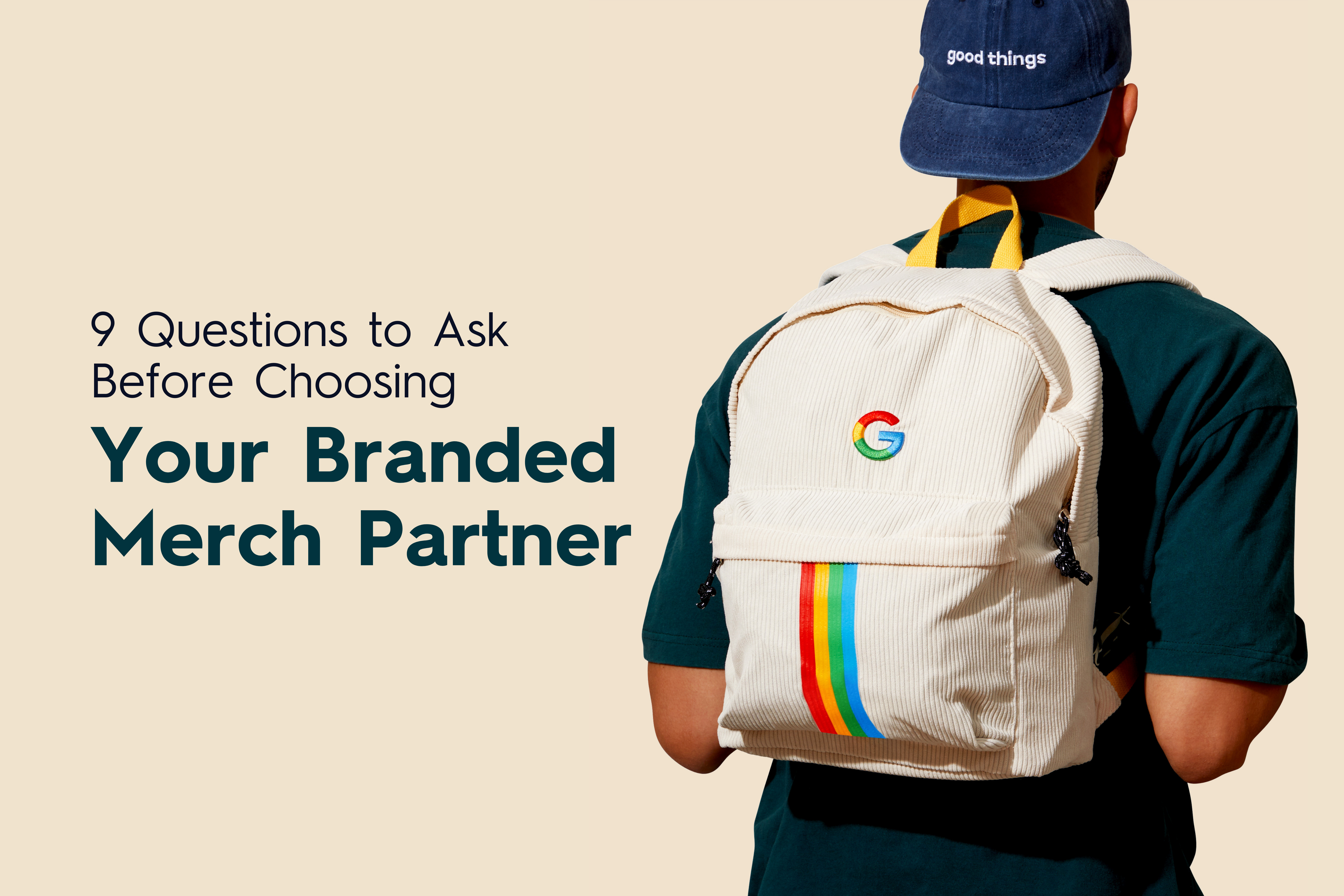
Can We Stop Settling for Mediocre Merch in 2026?
If you’ve been tolerating lacklustre branded products, this is your sign: your brand deserves better from your branded merch partner.
In fact, your brand deserves Good Things.
Before you file, changing your merch provider under “too difficult, would rather stick with my second-rate merch,” take a beat and ask yourself:
- On a scale of 1–10, how satisfied am I with my current branded product range?
- How many people are walking around with your brand’s designs that missed the mark?
- How much brand adoration are you leaving on the table?
Merch is an extension of your brand, your marketing, and your reputation.
If you’re creating dull, throw-away products, you’re quite literally putting your name to it.
So, be honest: if we could “bippity-boppity-boo” you into a better merch partner, would you do it?
If you answered yes, moving on from mediocre merch may be far easier than you expect.
A little more involved than a wave of a magic wand, sure, but the payoff is so very worth it.
Why Mediocre Merch is a Dangerous Place to Be
 Branded merch is:
- Boosting brand awareness
- Building customer loyalty and connection
- Driving employee engagement and culture
- Supporting marketing campaigns and events
Merch that’s “so-so” isn’t neutral; it’s much worse than that.
It’s a misrepresentation of your brand.
Playing it safe with bland designs or run-of-the-mill offerings will never get your branded products noticed.
So, unless your brand is mediocre, your merch shouldn’t be either.
Are They Even Capable? Your Capability Checklist
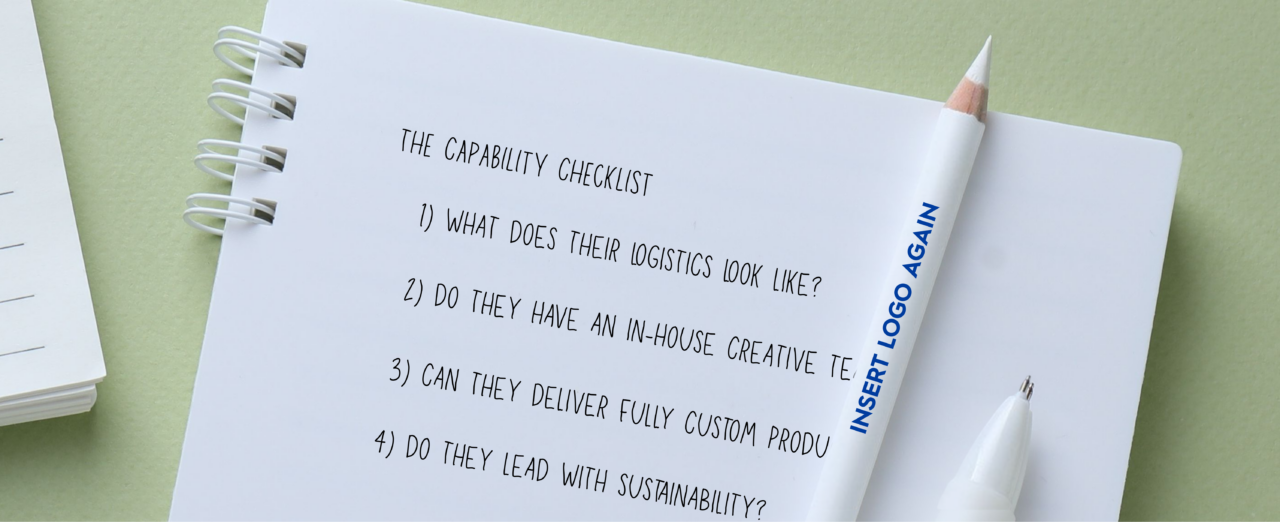
Switching partners may require some calls, emails, and file transfers. But it’ll be light work with an experienced branded merch partner.
Investing a little time now will protect your brand from the ongoing disaster that is dull merch.
So, if you’re ready to take your merch from misaligned to magnetic, here’s what we’d be asking your next merch partner:
1) What does their logistics look like?
Imagine investing in mesmerising merch your audience will love, only for it to never reach its destination. Fulfilment is make-or-break.
Ask about:
- In-house vs outsourced fulfilment
- Domestic and international shipping reach
- Typical delivery timeframes
- Storage and warehousing solutions
- Self-service online ordering portals
Example: At Good Things, 98% of in-stock orders are dispatched within 24 hours. We manage everything in-house, from the warehouse to online ordering.
2) Do they have an in-house creative team?
You want to design products that excite people.
A good creative team should be researching, designing, and producing products that are a cut above the rest.
A complete in-house creative team includes:
- Graphic designers to craft striking visuals
- Product designers to create entirely new products
The upside of working with a single internal team is faster turnarounds, effortless collaboration, and products that are on-brand from concept to delivery.
3) Can they deliver fully custom products?
Stock merch has its place, but custom is king for brands seeking maximum impact.
Custom merch provides:
- Freedom to design size, materials, colours, and branding
- Fewer supply issues
- Lower unit costs for large runs
- Perfectly aligned to all your brand guidelines.
Example: To see what’s possible, head on over to our portfolio.
4) Do they lead with sustainability?
Saying your merch is “eco-friendly” and actually having eco-friendly merch are not the same. A strong partner embeds sustainability at every stage and has the necessary certifications to prove it:
- Materials: Think organic cotton, hemp, RPET, recycled paper and their exact percentages provided
- Durability: Low-quality items, even “eco” ones, can wind up in a landfill
- Packaging: Whether it’s compostable mailers or recyclable boxes, it’s not just the product that needs to be eco-conscious
- Sourcing: Consider seeking a partner who is a Fairtrade-certified supplier or has verified memberships like 1% for the Planet or APCO
Industry research from PPAI found:
- Over three-quarters of consumers say sustainability influences whether they keep or use a branded product
- Nearly half say it increases their trust in the brand behind it.
- More than 60% prefer items made from recycled or eco-friendly materials.
If your branded product partner can’t answer confidently or show measurable initiatives, it’s worth reconsidering if they’re the right one.
5) Can they manage the full process?
You know what sounds like a mission? Having to handhold the “experts” through the process.
You most likely want a branded product partner who can proactively take on the full operation, managing the entire journey from product ideation to delivery.
What we’re looking for here is clarity, transparency, speed, and accuracy. Your line of questioning should include:
- How do you manage all the moving parts (production, sampling, approvals, etc.)?
- What do you outsource vs what’s handled in-house?
- What does your quality control look like?
6) Do they provide case studies and measurable ROI?
A polished portfolio is great; it lets you see what they can deliver.
But we also need to know what results they can achieve.
Ask for examples showing:
- Increased brand exposure
- Engagement metrics
- Revenue generated
Real-world outcomes help you make an informed decision. It’s no good having the fairest product in all of the land if there’s no ROI.
7) What can you expect communication-wise?
Deadlines matter, especially for events, conferences, multi-faceted campaigns, and timely gifts. Quiz them on:
- Typical response times from your account manager
- How they handle follow-ups and approvals
- Their process for urgent or time-sensitive campaigns
Good communication keeps campaigns on track and headache-free. No point making the switch only to be left sending “hey, just checking in” emails.
8) Do you offer storage and self-service options?
Getting in touch every time you need a new team shirt when you’re running a large operation can create a whole lot of friction.
It’s worth asking about:
- On-demand stock holding
- Online ordering portals for teams
- Real-time visibility of inventory
9) Is the process smooth sailing?
A partner who can simplify the process, save you time, and ensure every campaign runs smoothly is a keeper. To separate the ones who are and aren’t helpful, here are a few probing questions to ask:
- How seamless is ordering, approvals, and delivery?
- Do they have tools or systems to reduce admin headaches?
- Will they anticipate problems before they reach you?
Red Flags: What to Watch Out For in a Merch Partner
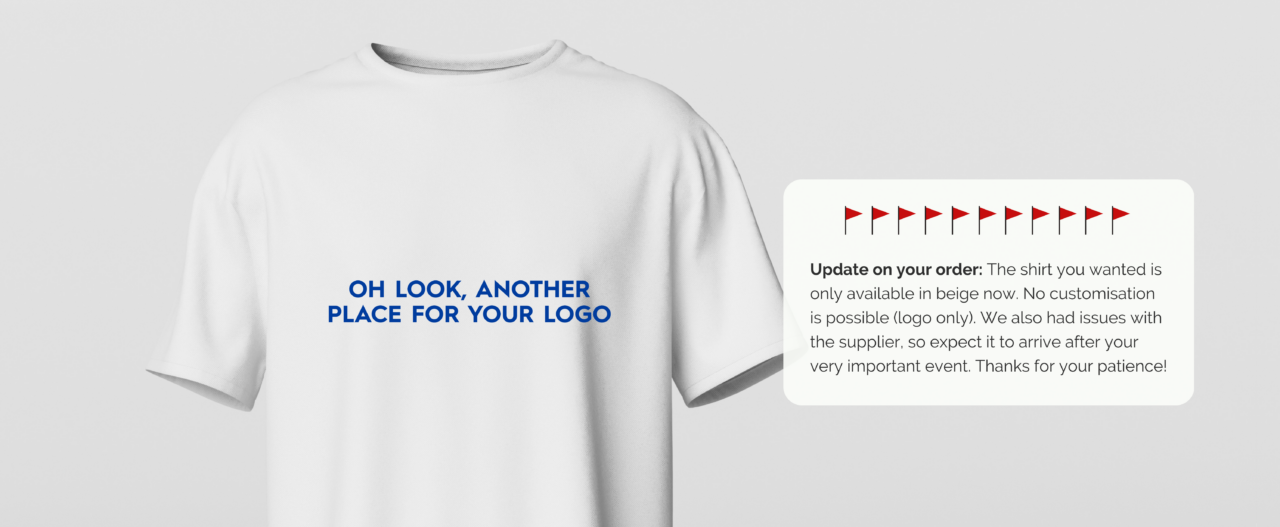
If you see any of these warning signs, it might be time to pause (or run for the hills):
- Slow or unclear logistics – If they can’t tell you where your merch is or how long it will take, you’ll be chasing packages instead of customers.
- Outsourced everything – A partner that outsources design, production, or fulfilment often means slower turnarounds and less control over quality.
- Catalogue-only mindset – If every product is generic and off-the-shelf, your brand will blend into the crowd.
- Greenwashing – Watch out for providers who throw around words such as “eco-friendly” without proof or certifications.
- Poor communication – constant missed emails, vague timelines, or no dedicated account manager. Pass.
- No measurement or ROI – A portfolio of pretty products without proof of results? Suspicious.
Rule of thumb: If more than one of these applies, it’s worth reconsidering who is holding the reins on your brand experience.
The Takeaway
Settling for “good enough” merch costs more than you think: missed visibility, lost loyalty, and diluted brand impact.
Ask these 10 questions, and see if your brand will be in good hands.
Ready to make way for merch that creates an impact? Get in touch.